










We are making a small adjustment to the registration schedule to ensure everything is ready for a smooth experience for our participants.
Thank you for your patience. We look forward to welcoming you to MICAI 2026!
Registration now opens: August 24, 2026
MICAI is the leading AI event in Mexico.
It brings together researchers, students, professionals, and industry experts from around the world to share advances in AI, machine learning, data science, and more.
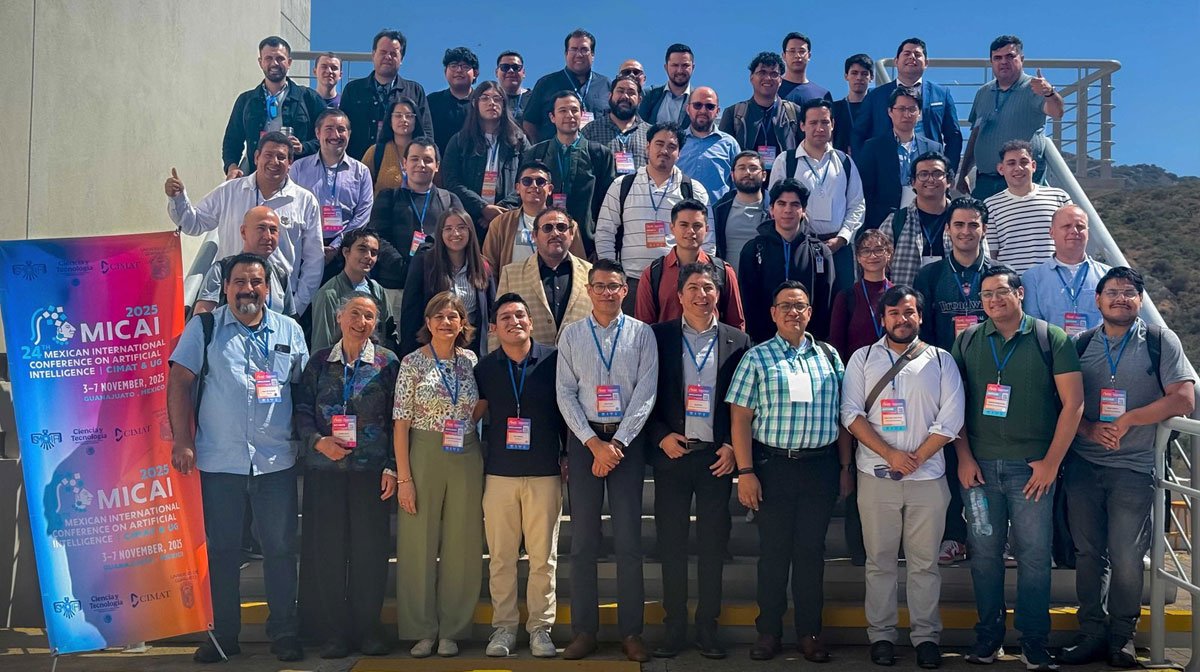
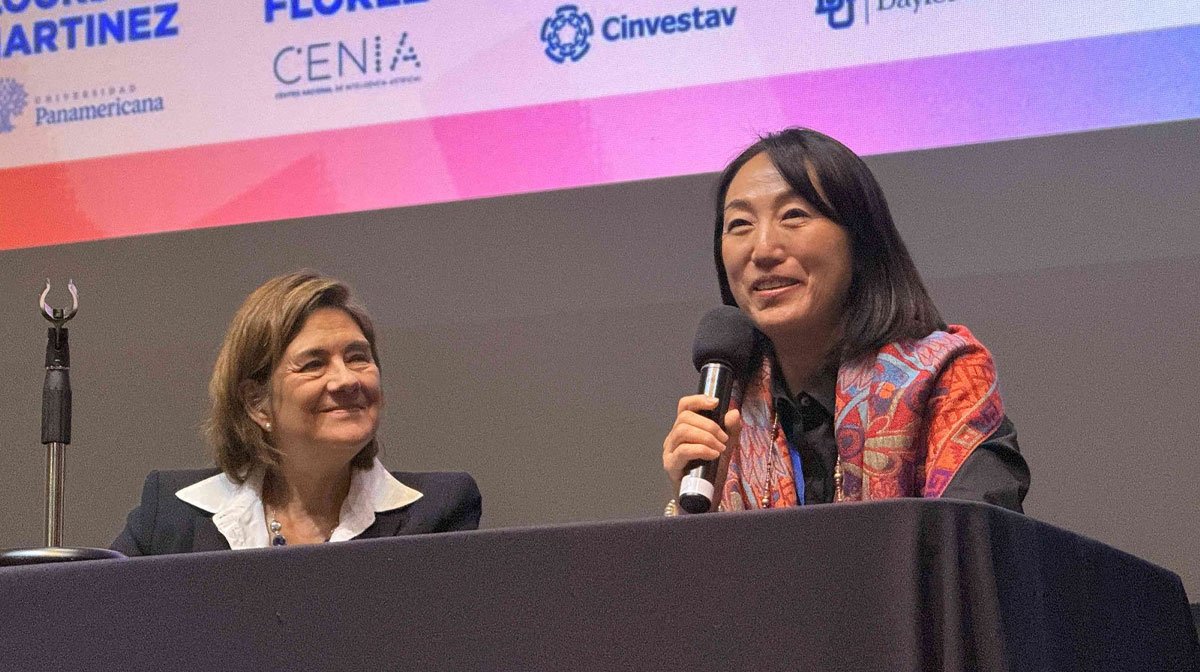
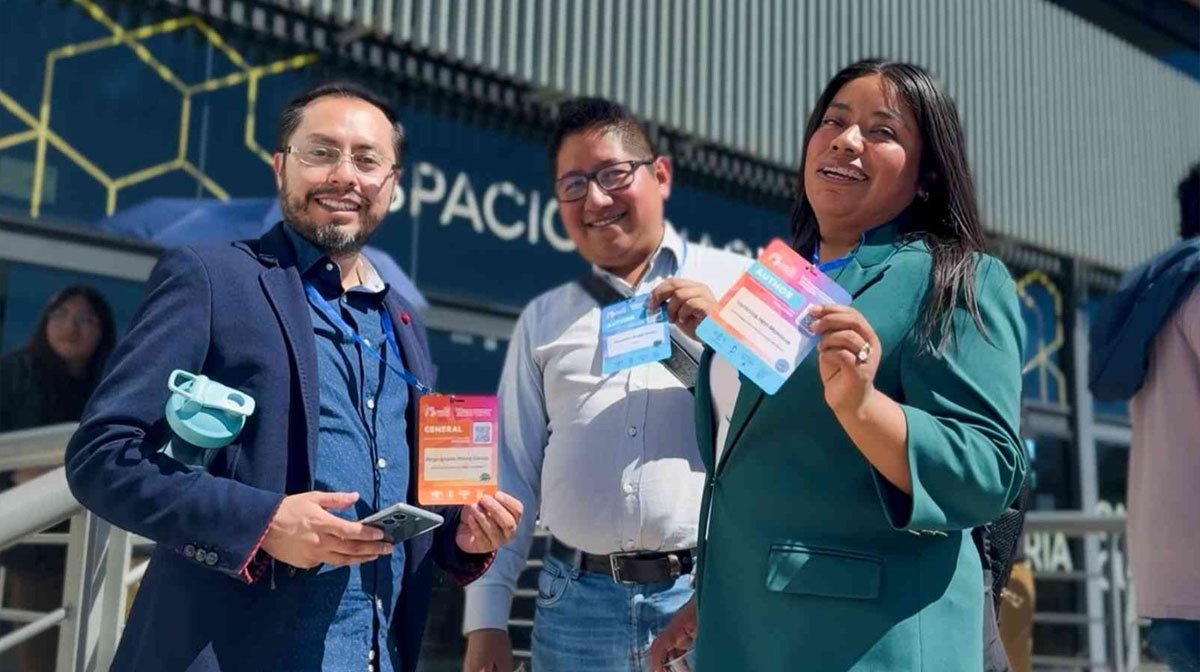
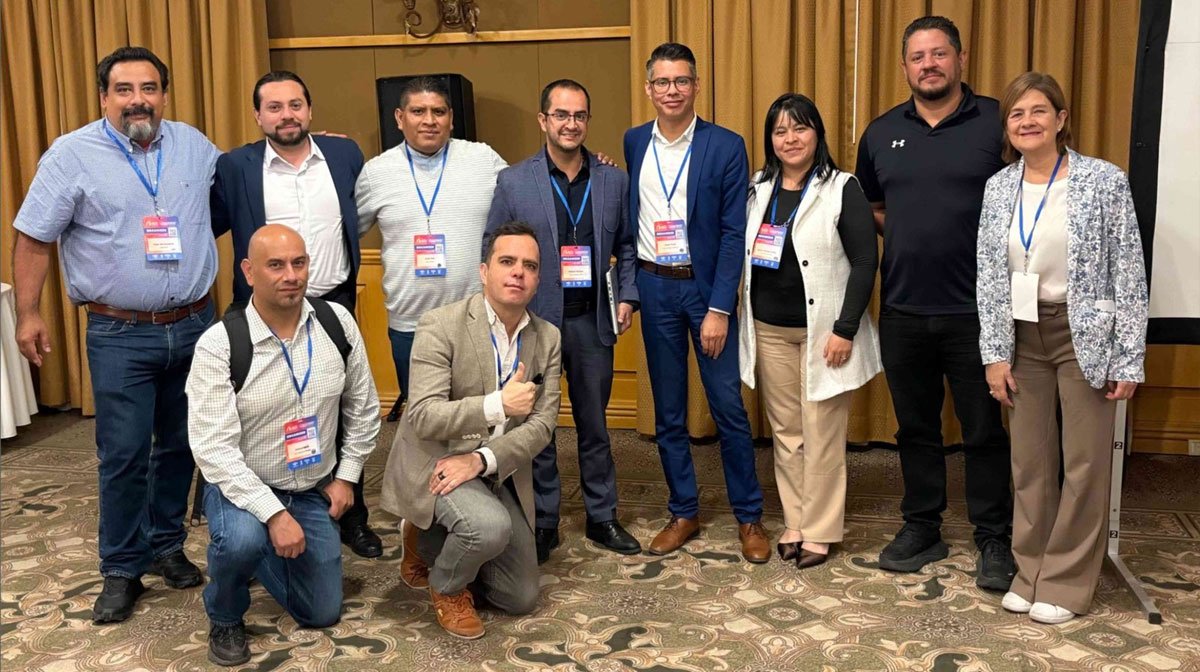
Remember with us MICAI 2025
Discover the highlights from the 24th edition of MICAI, organized in 2025 by SMIA in collaboration with CIMAT and Universidad de Guanajuato.
The Mexican International Conference on Artificial Intelligence (MICAI) is a yearly international conference series that has been organized by the Mexican Society for Artificial Intelligence (SMIA) since 2000. MICAI is a major international artificial intelligence (AI) forum and the main event in the academic life of the country’s growing AI community. This year, the conference will take place at Tec de Monterrey, Campus Chihuahua, Mexico.
MICAI is recognized by Springer as a premier international conference in the field of Artificial Intelligence. This high-level, peer-reviewed event brings together researchers, practitioners, and industry professionals from around the world to explore advances across all areas of AI. As artificial intelligence has grown in relevance in recent years, MICAI has strengthened collaborations with industry, governmental bodies, as well as international agencies and policymakers, and other actors of the ecosystem. The conference has featured industry panels and roundtables, invited stakeholders to give tutorials and more recently, introduced an industry-focused applied AI workshop within the conference.
The conference, as is traditional, showcases a large variety of research fields and topics. Moreover, the conference includes cutting-edge keynote lectures, as well as detailed paper and poster presentations. The first two days are dedicated to specialized workshops, comprehensive hands-on tutorials, AI competitions, and a doctoral consortium. Furthermore, thought-provoking panels provide a rich and exciting experience during the conference, which aim to cater to a wide audience. Moreover, we will continue the legacy of announcing the José Negrete Awards, the SMIA Best Thesis in Artificial Intelligence Contest’s results.
The proceedings of MICAI have been historically published in two different Springer volumes, Advances in Computational Intelligence and Advances in Soft Computing. The areas of interest include, but are not limited to all areas of Artificial Intelligence, Computational Intelligence, Machine Learning, Data Mining, Fuzzy Systems, research or applications.
MICAI 2026 is jointly organized by the Mexican Society for Artificial Intelligence (SMIA) and Tec de Monterrey, Campus Chihuahua. Celebrating 25 years of MICAI and 50 years of Tec Campus Chihuahua.
With Springer publications and strong collaborations with academia, industry, and government, MICAI is a global reference in the AI field.
25
Years of MICAI
50
Years of TEC Campus Chihuahua
200
Years of France-Mexico Friendship
This edition will serve as a bridge for international cooperation, featuring France as our Guest Country of Honor in celebration of the France–Mexico Bicentennial.
| 30 Jun, 2026, AoE | Papers submission deadline |
| 5 Aug, 2026 | Notification of acceptance |
| 23 Aug, 2026 | Camera-ready submission |
| 24 Aug, 2026 | Early bird registration start for authors |
| 25 Sep, 2026 | Early bird registration deadline for authors |
| 16 Oct, 2026 | Payment and registration deadline for authors |
| 2–6 Nov, 2026 | Conference |
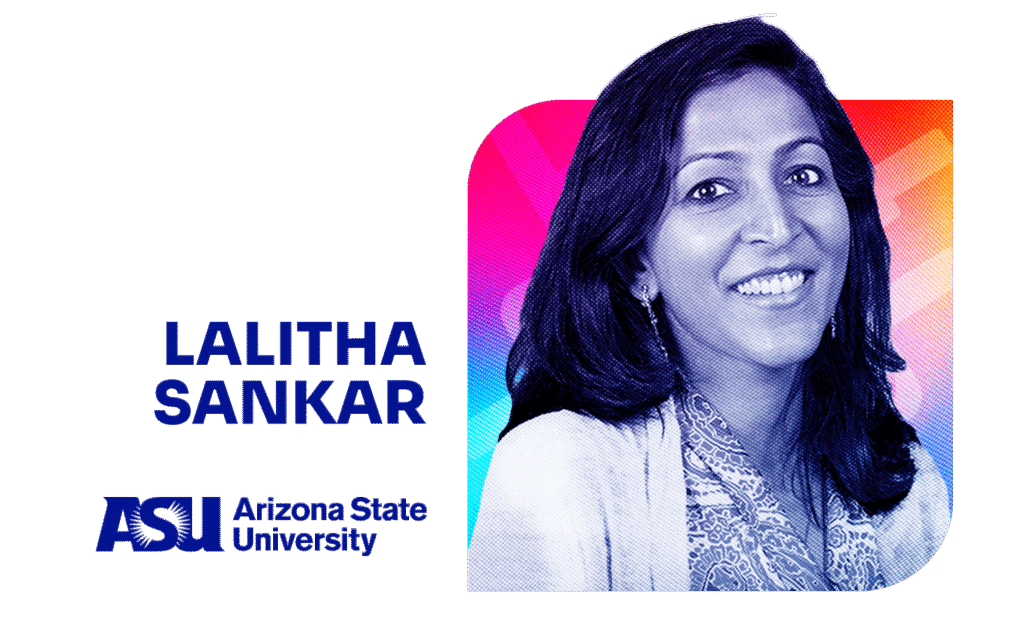
Diffusion models have achieved impressive performance in generating high-quality and diverse synthetic data. This talk will briefly review the underlying theory of discrete diffusion models and the setting of classifier-free guidance for conditional diffusion models. We will then focus on two emerging challenges for these models: (i) enhancing diffusion models to produce high-fidelity and diverse samples when trained on class-imbalanced data, and (ii) quantifying generalization and memorization of diffusion models when the training data has class-imbalances. We will briefly discussion a solution to this via CORAL (Contrastive Regularized Alignment of Latents), a framework that leverages supervised contrastive losses to encourage well-separated latent class representations and present results on enhancing text-prompted generation of images trained on highly imbalanced medical datasets.
Lalitha Sankar is a Professor in the School of Electrical, Computer and Energy Engineering at Arizona State University. She received her bachelor’s degree from the Indian Institute of Technology, Bombay, master’s degree from the University of Maryland, and doctorate from Rutgers University. Following her doctorate, Sankar was a recipient of a Science and Technology Postdoctoral Fellowship from Princeton University.
Sankar’s research interests are at the intersection of information and data sciences with applications to the design of both generative and discriminative machine learning algorithms with algorithmic fairness, privacy, and robustness guarantees. For her doctoral work, she received the 2007-2008 Electrical Engineering Academic Achievement Award from Rutgers University. She was a co-recipient of the ITSOC Joy Thomas Tutorial Paper award in 2025. She received an IEEE Globecom Best Paper Award and the National Science Foundation CAREER award. Sankar was a distinguished lecturer for the IEEE Information Theory Society from 2020-2022. She presently serves as an Associate Editor for IEEE Transactions on Information Theory.

The past decade has witnessed a surge in the development and adoption of machine learning algorithms to solve day-a-day computational tasks. Yet, a solid theoretical understanding of even the most basic neural networks used in practice is still lacking, as traditional statistical learning methods are unfit to deal with the modern regime in which the number of model parameters are of the same order as the quantity of data – a problem known as the curse of dimensionality. Curiously, this is precisely the regime studied by Physicists since the mid 19th century in the context of interacting many-particle systems. This connection, which was first established in the seminal work of Elisabeth Gardner and Bernard Derrida in the 80s, is the basis of a long and fruitful marriage between these two fields.
In this talk I will motivate and review this historical connection between statistical physics and machine learning, and discuss some recent results on how this perspective has helped us understanding interesting phenomena such as double descent, feature learning and scaling laws.
Bruno Loureiro is a CNRS research scientist at the Computer Science department on École Normale Supérieure in Paris, working on the crossroads of machine learning and statistical mechanics. He holds a PhD degree in Physics from the University of Cambridge, and before moving to ENS he held postdoctoral positions at the École Polytechnique Fédérale de Lausanne (EPFL) and the Institut de Physique Théorique (IPhT) in Paris. He is interested in Bayesian inference, theoretical machine learning and high-dimensional statistics more broadly. His research aims at understanding how data structure, optimisation algorithms and architecture design come together in successful learning.
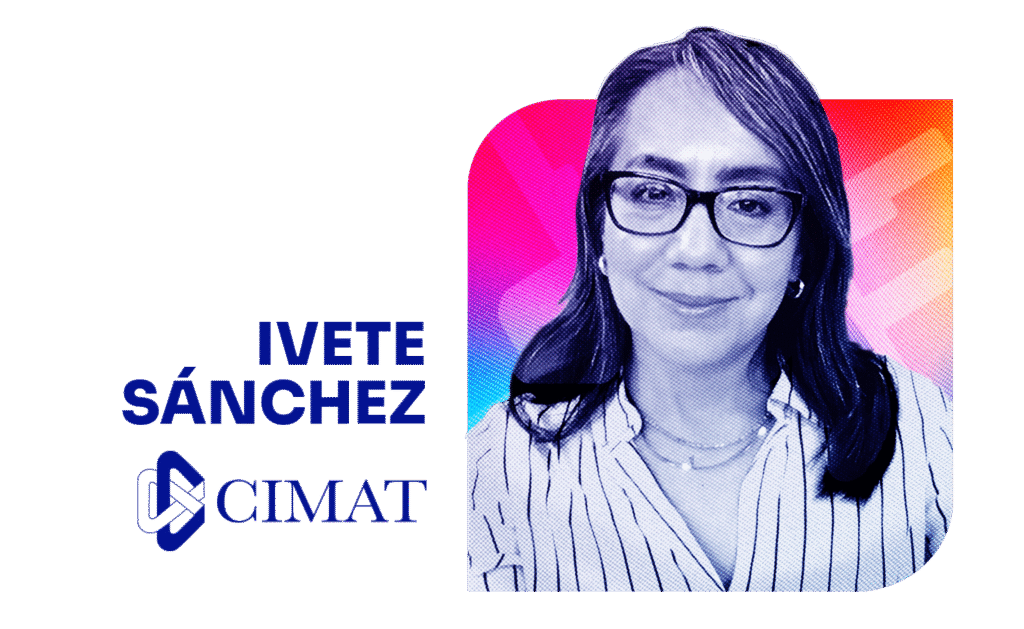
Responsible Artificial Intelligence (Responsible AI) is a multidisciplinary field that seeks to ensure that AI systems are trustworthy, fair, transparent, safe, accountable, and aligned with human and societal values. It connects ethical principles with technical methods, organizational processes, governance mechanisms, and emerging regulatory frameworks.
This talk will provide an overview of key dimensions of Responsible AI, as well as international initiatives such as the UNESCO Recommendation on the Ethics of AI, the OECD AI Principles, and the EU AI Act. A central challenge is moving from principles to practice: developing concrete methods to assess AI risks, identify and mitigate bias, establish governance structures, and integrate responsible practices throughout the AI lifecycle. Particular attention will be given to pre-, in-, and post-processing interventions for addressing algorithmic fairness and other AI risks.
The talk will also present initiatives in which I have participated, particularly on the operationalization of Responsible AI and AI governance in the Mexican context, and will discuss the growing impact of Responsible AI on AI research and practice, highlighting the need for collaboration across technical, organizational, and social disciplines to develop AI systems that are not only effective, but also trustworthy and socially responsible.
Ivete Sánchez Bravo, PhD, is a Mexican specialist in applied mathematics, computer science, artificial intelligence, data science, and technological innovation, with more than 20 years of experience developing and implementing technology-based solutions for public and private organizations. She is currently affiliated with the Mathematics Research Center (CIMAT), where she has led and participated in projects involving mathematical modeling, scientific computing, AI, data science, and software development.
She holds a PhD in Administration, specializing in Technological Innovation, with research focused on responsible AI governance in Mexican organizations and SMEs. She also holds an MSc in Computer Science and Industrial Mathematics from CIMAT and a BSc in Computer Systems Engineering from IPN.
Her current work focuses on Responsible AI, AI ethics, governance, algorithmic fairness, and AI risk management, particularly on translating ethical principles into practical methodologies and organizational processes. She has received specialized training in AI ethics through international programs, including The Turing College, the Pan-African Center for AI Ethics, and Mila. She is also actively involved in initiatives promoting women’s participation in AI and data science.

Why does the “AI gold rush” promise limitless abundance while simultaneously generate warnings of catastrophe? What is driving the trillions in capital investment? And why are the very industry leaders racing to build more powerful systems demanding monitoring and regulation?
This keynote sheds a light on the emerging landscape of frontier AI development. It will examine the competing visions, hidden interests, and underlying assumptions behind these stark contradictions.
It frames AI development as a complex socio-technical construct, exploring how capabilities shape and must be shaped by business models, state intervention, regulation, labour relations, and geopolitical dependencies.
Professor Manuel Dávila Delgado is Professor of Applied AI and Business Transformation at Birmingham City University, with previous academic appointments at UWE Bristol, the University of Cambridge and TU Eindhoven. His research sits at the intersection of engineering and computer science. He specialises in Applied AI, Digital Twins, immersive technologies, and robotics for the built environment and infrastructure. He has secured more than £3.6 million in research funding from UKRI, Innovate UK and industry, and has published over 60 papers, attracting more than 9,300 citations.
His research combines foundational digital engineering methods with real-world deployment in construction, transport, and defence. He received the ASCE J. James R. Croes Medal for research with practical impact and has advised government, industry and international research initiatives on Digital Twins, AI, and digital transformation.

Generative AI has become part of everyday study and teaching faster than any institution planned for. In 2026, almost all students use it, yet growing evidence shows that better outputs do not mean better learning. How do we move from scattered experiments to a coherent, nationwide transformation of higher education?
This keynote draws on the French national mission “AI and Higher Education”, which I co-led and which delivered 26 recommendations to the government in 2025. Its survey of more than 30,000 students, teachers and staff shows widespread use but uneven understanding, very little training, and assessment practices under pressure.
I will also show how machine learning helped us listen at this scale. A frugal, sovereign pipeline built on open-weight models turned about 100,000 free-text answers into structured, explorable syntheses on a single GPU, for roughly 2 kWh: LLM-based argument extraction, 4,096-dimensional embeddings, semantic clustering and hierarchical summarisation. I will close with what we are doing at Paris-Saclay, including the #BrevetAI certification now deployed nationwide, and with open research questions for the AI community: measuring learning rather than performance, designing tutors that build thinking, and keeping assessment fair.
Frédéric Pascal is a Full Professor at CentraleSupélec, Paris-Saclay University, in applied mathematics for AI at the Signals and Systems Laboratory (L2S). His research spans statistics, signal and image processing, and machine learning, with over 200 publications in leading international journals and conferences. He holds editorial responsibilities for several scientific journals and serves on industrial and academic technical committees. He is Vice-President for AI at Paris-Saclay University and Director of the DataIA Institute, one of France’s national AI clusters.
A strong advocate of AI education at scale, he authored the national report “AI and Higher Education: Training, Structuring and Appropriation by Society” (2025, 26 recommendations) for the French Ministry of Higher Education. He leads #BrevetAI, a public AI certification launched at Paris-Saclay in 2025 and rolled out nationwide in 2026. He coordinates France–Taiwan scientific cooperation on AI and serves as an expert to the French Ministry of Culture.
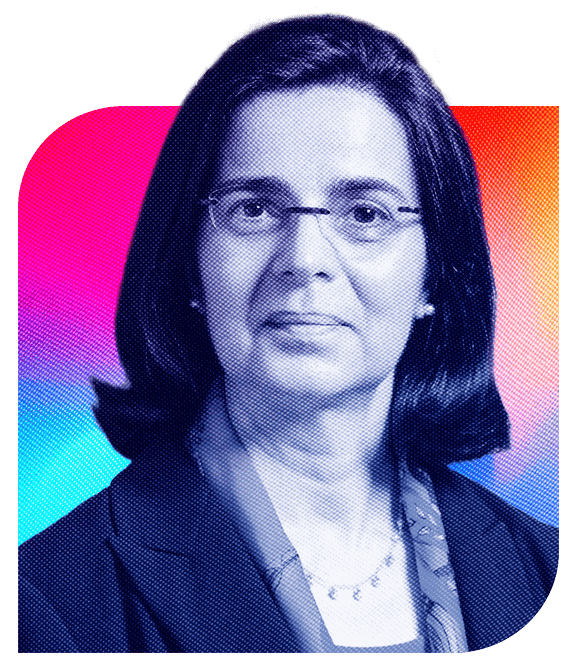
KEYNOTE SPEAKERS

Untangling the AI gold rush: towards a socio-technical perspective on frontier development

CHALERAN, USA
UNIVERSITÉ PARIS-SACLAY, FRANCE

CARNEGIE MELLON UNIVERSITY, USA
AAAI, USA
KEN KENNEDY INSTITUTE,
RICE UNIVERSITY, USA

INSTITUTE FOR EXPERIENTIAL AI, NORTHEASTERN UNIVERSITY, USA

UNIVERSITÉ DE
LORRAINE, FRANCE

PIERO P BONISSONE
ANALYTICS LLC, USA

TECHNICAL UNIVERSITY
OF MADRID, SPAIN

NEW YORK
UNIVERSITY, USA

PONTIFICAL CATHOLIC UNIVERSITY OF RIO DE JANEIRO, BRAZIL

UNIVERSITY OF WYOMING, USA
UBER AI LABS, USA

GOOGLE,
USA

IWATE PREFECTURAL UNIVERSITY, JAPAN

UNIVERSITY OF CALIFORNIA,
USA

NEC LABORATORIES,
USA

VIVOMIND,
USA
 CHIHUAHUA, MEXICO
 CHIHUAHUA, MEXICO
 AI AND MORE
 AI AND MORE
| What's Included | Attendee | Innovation | Co-Author | Author |
|---|---|---|---|---|
| Workshops | ✓ | ✓ | ✓ | ✓ |
| Tutorials | ✓ | ✓ | ✓ | ✓ |
| Doctoral Consortium | ✓ | ✓ | ✓ | ✓ |
| Keynote Talks | ✓ | ✓ | ✓ | ✓ |
| Panels | ✓ | ✓ | ✓ | ✓ |
| Poster Session | ✓ | ✓ | ✓ | ✓ |
| Welcome Cocktail | ✓ | ✓ | ✓ | ✓ |
| Hosted Coffee | ✓ | ✓ | ✓ | ✓ |
| Data-thon* | ✓ | ✓ | ✓ | ✓ |
| Demo Showcase | — | ✓ | ✓ | ✓ |
| Welcome Kit | — | ✓ | ✓ | ✓ |
| Gala Dinner** | — | — | ✓ | ✓ |
| Publication Fee | — | — | — | ✓ |
| SMIA Membership*** | — | — | — | ✓ |
Extras are confirmed separately from your main registration. Dinner seating is subject to availability.


General Chair:
Hiram Ponce | Universidad Panamericana
Program Chairs:
Gilberto Ochoa | Tecnológico de Monterrey
Iris Méndez | Universidad Autónoma de Ciudad Juárez
Workshops Committee:
Roberto Vazquez |Universidad La Salle México
Gustavo Arroyo | INEEL
David Pinto | Benemérita Universidad Autónoma de Puebla
Tutorials Committee:
Joanna Alvarado |Tecnológico de Monterrey
Claudia González | Instituto Tecnológico de Tijuana
Josué Ruiz | CENIDET
Keynote Talks Committee:
Bella Martínez | Instituto Politécnico Nacional
Joanna Alvarado | Tecnológico de Monterrey
Panels Committee:
Obdulia Pichardo| Instituto Politécnico Nacional
Miguel González | Tecnológico de Monterrey
Noé Castro | CENIDET
Thesis Awards Committee:
Antonio Marín | Universidad Veracruzana
Miguel González | Tecnológico de Monterrey
Félix Castro | Universidad Autónoma del Estado de Hidalgo
Activity Committee:
Ari Barrera | Universidad Panamericana
Claudia González | Instituto Tecnológico de Tijuana
Publication Committee:
Hiram Ponce | Universidad Panamericana
Gilberto Ochoa | Tecnológico de Monterrey
Iris Méndez | Universidad Autónoma de Ciudad Juárez
Doctoral Consortium Committee:
Miguel González | Tecnológico de Monterrey
Women in AI Committee:
Lourdes Martínez | Universidad Panamericana
Joanna Alvarado | Tecnológico de Monterrey
Claudia González | Instituto Tecnológico de Tijuana
Special Activities Committee:
Miguel González | Tecnológico de Monterrey
Ismael Medina | Databricks
Yaxk’in Coronado | Universidad La Salle México
Communication and Design Committee:
Omar Saldivar | Barbarosos
Luis Gerardo Téllez | Barbarosos
Sponsorship Committee:
Leobardo Morales | IBM Mexico
Ismael Medina | Databricks
Volunteer & Students Committee:
Ari Barrera |Universidad Panamericana
Omar Saldivar | Barbarosos
Antonio Marín | Universidad Veracruzana
Local Chair:
Saul Cuen Rochin
Finance Committee:
Rocio Jaqueline Piñón Díaz de León
Sponsorship Committee:
Sofía Flores Escoto
Claudia Palmira Ortega Fierro
Registration Committee | Logistics Committee:
Claudia Josefina Guerrero Patiño
Cristina Lourdes Saucedo Navarro
Promotion Committee:
Rosario Elizabeth Vargas Guevara
Alberto Aguilar Gonzalez
Carlos Augusto Ventura Molina
Raime Alejandro Bustos Gardea
Student Committee:
Ana Gabriela Delgado Macías
Alejandro M. Saenz
Soraya A. Hernández García
Special Acknowledgements:
Feniosky Peña Mora | Decano Nacional de la Escuela de Ingeniería y Ciencias, Tecnológico de Monterrey
Jorge Cruz Camberos | Presidente del Consejo Directivo Desarrollo Económico del Estado de Chihuahua, A.C.
Alberto Terrazas Seyffert | Presidente de la Educación Superior del Norte A.C (ESNAC) y del Consejo del Tecnológico de Monterrey, Campus Chihuahua
Armando Bahena Vigna | Director General del Tecnológico de Monterrey, Campus Chihuahua
José Jesús Jordan Orozco | Dirección de Desarrollo Económico y Competitividad – Gobierno municipal de Chihuahua
Ulises Alejandro Fernández Gamboa | Secretaría de Innovación y Desarrollo Económico – Gobierno del Estado de Chihuahua
Jesús García López | Subsecretario, Secretaría de Innovación y Desarrollo Económico (SIDE)
Enrique Cortés Rello | Líder Nacional del Hub de Inteligencia Artificial Tecnológico de Monterrey
Ministry for Europe and Foreign Affairs:
Jean-Noël Barrot | Minister for Europe and Foreign Affairs
Alix Everard | Director for the Americas and the Caribbean
Jérôme Audin | Deputy Director for the Americas and the Caribbean
Kim Ramoneda and Élodie Weis
Sabine Sciortino | Director for Cultural, Educational, University, and Scientific Diplomacy
Thomas Wagner | Deputy Director of Resources and Diplomatic Network
Elena Arnal, Juliana Huerre, and Sarah Mazher
Institut Français:
Eva Nguyen Binh | President
Thomas Hannebique | Secretary General
Adama Fofana and Anne-Marie Perrineau
Sophie Renaud | Director of Cooperation, Dialogue, and Society
François Ronan Dubois and Zara Fournier
Jean-Philippe Rousse | Director of Communication and Sponsorship
Toufik El Madiouni, Néguine Mohseni, and Paloma Garcia
Circle of Patrons:
Safran, Chairmanship of the Circle of Patrons
Ross McInnes | Chairman
Alejandro Cardona Seemann | President and Country Delegate in Mexico
Accor
Sébastien Bazin | Chairman and CEO
Mauro Rial | Chief Operating Officer, Hispanic Zone and North America
Airbus
Guillaume Faury | CEO
Roberto Capilla | President of Airbus Mexico
BNP Paribas
Jean Lemierre | Chairman of the Board of Directors, BNP Paribas
Philippe de Caraman | CEO, BNP Paribas
Engie
Jean-Pierre Clamadieu | Chairman
Brice Clémente | CEO, Engie Mexico
Fives
Frédéric Sanchez | Chairman
Mathias Dechelette | Regional Director Mexico
AXA Fund for Human Progress
Thomas Buberl | CEO
Clément Rouxel | General Delegate
L’ORÉAL
Nicolas Hieronimus | CEO
Deborah Armstrong | General Manager Mexico
LVMH/Sephora
Marc-Antoine Jamet | Secretary General
Guillaume Motte | President and CEO, Sephora
Sanofi
Audrey Duval | President
Ignacio Sáez-Torres | General Manager Latin America
TotalEnergies Foundation
Patrick Pouyanné | Chairman and Chief Executive Officer
Jacques-Emmanuel Saulnier | General Delegate
French-Mexican Chamber of Commerce and Industry
Xavier de Bellefon | President
Haber Najjar | General Director
Embassy of France in Mexico / Institut Français d’Amérique Latine (IFAL):
Delphine Borione | Ambassador of France to Mexico
Nicolas Broutin | Minister Counselor
Jean-François Guéganno | Counselor for Cooperation and Cultural Action / Director of IFAL
Émilie Brückmann | Deputy Counselor for Cooperation and Cultural Action
Amélie Mammou | Mission Officer for the Team France Fund
Andrea Caldas | Secretary General
Pauline Delomez | Deputy Secretary General
Thibault López Brunner | Officer for Technical Cooperation in AI
Anouk Dupin | Technical Cooperation Assistant
Mónica Pióncely-Esquer | Honorary Consul of France in Chihuahua
Manifest Culture















MICAI 2026 is proudly supported by leading institutions and organizations committed to advancing artificial intelligence in Mexico and around the world.









MICAI 2026 is proudly supported by leading institutions and organizations committed to advancing artificial intelligence in Mexico and around the world.