|




|
|


21st Mexican International Conference on Artificial Intelligence
October 24 to 29 • "Salón de Congresos", Tecnológico de Monterrey (ITESM), Monterrey, Mexico • On-site conference (virtual presentations are accepted as an exception)
Registration available! Click here (only for non-authors)
Click here to access the Springer LNAI MICAI 2022 Proceedings
| Links
for the video-conference rooms: |
||||
|---|---|---|---|---|
| ROOM 1 |
ROOM 2 |
ROOM 3 |
ROOM 4 | ROOM 5 |
| Click here | Click here | Click here | Click here | Click here |
MICAI 2022 Program
Download:
overview (.pdf); detailed
(.xls)
|
All important information will be published here
New special issue! Extended version of selected papers for MICAI will be published in Sensors. See details Keynote speaker announced! Prof. Nikhil R. Pal is one of the keynote speakers at MICAI 2022. See Keynote speakers Call for tutorials is now open! You can submit your proposal, see details here Call for workshops is now open! See details here Notifications about submitted
articles is in progress! Authors of submitted papers
to MICAI 2022 will receive the notifications
during the current week (August 15-19). Mail with instructions for the camera-ready version was sent. The instructions to upload the camera-ready version of accepted papers were sent to all the authors. If you have not received the mail or have any questions, please contact us at: micai2022@smia.mx Accomodation information is available! See details here Registration for MICAI 2022 is available! Click here (only for non-authors) MICAI
2022 detailed program available: Download
it here Virtual presentations: Please identify the room of your presentation and access through the corresponding link. LNAI
MICAI 2022 Proceedings: free access to
authors here |
Publication: Springer LNAI and
special issues of journals.
A number of selected papers will be published in Computación y Sistemas and
POLIBITS.
Keynote speakers
Collocated: Workshops
/ Call for Workshops,
Tutorials/
Call for Tutorials,
Doctoral
Consortium/Call for Doctoral Consortium
MICAI was characterized
by Springer as premier conference in Artificial
Intelligence. It is a high-level peer-reviewed international
conference covering all areas of Artificial Intelligence,
traditionally held in
All previous editions of MICAI were published in Springer LNAI (WoS, Scopus, EI). At past MICAI events, extended versions of a considerable number of the LNAI papers were invited to special issues of journals, including ISI JCR-indexed journals; see for example a special issue on MICAI of Expert Systems with Applications. Recent MICAI events received over 300–400 submissions from over 40 countries each, with acceptance rate around 25% for the main session.
Publication: Papers accepted for long oral presentation will be published by Springer in a volume of the series Lecture Notes in Artificial Intelligence (LNAI). Best papers awards will be granted to the 1st, 2nd and 3rd places. Special issues of journals are anticipated for best papers. Extended versions of selected papers are expected to be invited to special issues of journals, including ISI JCR-indexed journals. Traditionally at MICAI, the results of the SMIA Best Thesis in Artificial Intelligence Contest are announced.
| June 20 | Abstract -- draft /
expression of interest: just a general idea of what your
paper will be about. Why not submitting it right now? You can change it later if needed. NEW You can still upload your full paper if you did not submit your abstract. |
|
|
June 30 July 07 |
Full text for double-blind review. NEW Deadline extension |
|
| August 15 |
|
Notification of acceptance. |
| August 26 |
|
Camera-ready and payment deadline. |
| October 24 to 25 |
|
Pre-conference events, tutorials and workshops. |
| October 26 to 28 |
|
Main conference activities: keynote talks and regular presentations. |
| October 29 |
|
Post-conference events. |
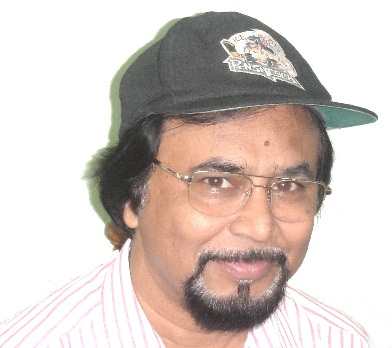 |
Prof. Nikhil R. Pal,
Indian Statistical Institute, Calcutta, India.
In this “bigger the better” era, how relevant is dimensionality reduction? – A fuzzy answer! Abstract: In this era of artificial intelligence, when we are driven by the philosophy, “bigger the better” – bigger dataset, bigger architecture; when we train networks with about 175 billion parameters, are the following quotes relevant? "Make everything as simple as possible, but not simpler."; “I am not a genius, I am just curious. I ask many questions, and when the answer is simple, then God is answering.” (Albert Einstein, 1879 – 1955); “Nature is pleased with simplicity. And nature is no dummy” (Isaac Newton, 1643–1727)? If not, then this talk is out of fashion! However, in our view, the philosophy behind these quotes is still relevant and important. Why? Even today all problems are not big data problems; all problems are not text and/or image driven; and many problems cannot afford to rely on black-box models. Moreover, usually these black-box systems cannot deal with the open-world nature of real-life classification/decision making systems. Thus, the issues relating to dimensionality reduction, visualization, understandability or transparency of a decision making system, and its capability of dealing with the open-world problem are important. We shall discuss these issues and explain how fuzzy rule based systems enjoy all the desirable attributes. This will be followed by designing of fuzzy rule based systems for these tasks: dimensionality reduction preserving the geometric structure of the data; an unique integrated approach to feature selection and system identification along with a control on the level of redundancy among the selected features; and manifold learning when a high dimensional data lie essentially on a lower dimensional manifold. We shall demonstrate how easily such a system can refrain from making a decision when it should. Finally, the talk will be concluded with a discussion on the merits and limitations of such systems. Bio: Nikhil R. Pal is a is a Professor in the Electronics and Communication Sciences Unit and is the Head of the Center for Artificial Intelligence and Machine Learning of the Indian Statistical Institute. His current research interest includes brain science, computational intelligence, machine learning and data mining. He was the Editor-in-Chief of the IEEE Transactions on Fuzzy Systems for the period January 2005-December 2010. He has served/been serving on the editorial /advisory board/ steering committee of several journals including the International Journal of Approximate Reasoning, Applied Soft Computing, International Journal of Neural Systems, Fuzzy Sets and Systems, IEEE Transactions on Fuzzy Systems and the IEEE Transactions on Cybernetics. He is a recipient of the 2015 IEEE Computational Intelligence Society (CIS) Fuzzy Systems Pioneer Award and 2021 IEEE CIS Meritorious Service Award. He has given many plenary/keynote speeches in different premier international conferences in the area of computational intelligence. He has served as the General Chair, Program Chair, and co-Program chair of several conferences. He has been a Distinguished Lecturer of the IEEE CIS (2010-2012, 2016-2018, 2022-2024) and was a member of the Administrative Committee of the IEEE CIS (2010-2012). He has served as the Vice-President for Publications of the IEEE CIS (2013-2016) and the President of the IEEE CIS (2018-2019). He is a Fellow of the West Bengal Academy of Science and Technology, Institution of Electronics and Tele Communication Engineers, National Academy of Sciences, India, Indian National Academy of Engineering, Indian National Science Academy, International Fuzzy Systems Association (IFSA), The World Academy of Sciences, and a Fellow of the IEEE, USA. |
 |
Dr. Miguel González
Mendoza, Tecnologico de Monterrey, Mexico.
The need of effective data flows for Machine Learning and Deep Learning; from Structure, Learning to Performance on Applications. Abstract:
Nowadays, the relevance of
Machine Learning and Deep Learning has been
increased in pattern recognition problems. In the
last ten years of intensive research, with the
popularity of deep learning and its capability to
solve a huge variety of different problems, such
as computer vision applications, increased the
need to create better models under the paradigm of
more hardware capabilities. In this talk, we will
briefly review what aspects are needed in order to
create and enhance solutions enabled by Machine
Learning and Deep Learning, considering aspects of
computing architecture, hardware-software codesign
(i.e. GPU, optimization and inference platforms),
as well as the orchestration of data for a batch
or an online data-ingestion. We briefly show some
examples for face recognition, identity
recognition, digital twins and activity detection,
for which, not only precision is necessary, but
also affordability and sustainability for
technical, ethical and environmental requirements. Bio: Miguel González Mendoza holds a PhD degree and a Postdoc in Artificial Intelligence from INSA and LAAS-CNRS Toulouse, France, in 2003 and 2004 respectively. Since 2004 he works as research professor at Tecnologico de Monterrey, Mexico. Miguel González Mendoza’s research activities are focused on machine learning and deep learning, computer vision, areas in which has supervised 11 PhD and 28 MSc. Theses, published more than 130 peer reviewed scientific publications, participated and conducted more than 20 national (CONACYT founded) and international (European founded) research and innovation projects, and chaired 4 international Congresses, and had served as senior consultant in the Financial Sector. President of the Mexican Society for Artificial Intelligence (2017-2018), member of the Mexican National Research System (SNI) rank II, member since 2006. Member of the Mexican Academy of Sciences. Head of the Graduate Programs on Computer Sciences at Tecnologico de Monterrey, Mexico City 2005-2016. Young Scientist at the World Economic Forum for New Champions, 2012. |
 |
Dr. Rem Collier,
University College Dublin, Ireland.
Combining Microservices, REST, Linked Data and Multi-Agent Systems
Abstract:
The emergence of the
Microservices and REST architectural styles within
industry present an opportunity to rethink how
Multi-Agent Systems (MAS) technologies can be
integrated into mainstream software architecture.
This talk will introduce a novel MAS integration
strategy, known as Multi-Agent MicroServices
(MAMS) that enables agents to be immersed
seamlessly within Microservices architectures. It
will explore the use of Semantic Microservices
that expose Linked Data representations to
implement decentralised hypermedia data structures
that can easily be transformed into knowledge
graphs that can be traversed by MAMS agents. The
potential of the approach is illustrated through
ongoing case studies in the areas of Agent-Based
Transport Simulation and Digital Twins for Smart
Agriculture. Bio: Rem Collier is an Associate Professor in the UCD School of Computer Science, Dublin, Ireland, where he has been faculty since 2004. His primary research interests are focused on Multi-Agent Systems and in particular Agent-Oriented Software Engineering / Programming. From 1996 to 2010, he developed the Agent Factory Framework, a cohesive framework for the rapid prototyping of Multi-Agent Systems (MAS). During that time, he was involved in a range of projects exploring its application to Social Robotics, Virtual Reality and Mobile Computing. He was a post-doctoral researcher on the team that won the prestigious 2003 CIA Systems Innovation Award for work on the Agents Channelling ContExt Sensitive Services (ACCESS) architecture. Since 2017, his research interests have centred around the areas of MAS, Microservices, REST and Linked Data where he has proposed the Multi-Agent MicroServices (MAMS) architectural style as a novel approach to integrating agent technologies into Microservice-based software architectures. He has been Primary Supervisor of 10 PhD and 12 MSc theses and published over 120 academic papers. He is currently Lead-PI of CONSUS, a €16.5M nationally funded Strategic Partnership Project focussed on Digital Precision Agriculture & Crop Science and is a Principal Investigator of CAMEO a Disruptive Technologies Innovation Project charged with developing Ireland future Earth Observation platform. |
 |
Dra. Xiaoou Li Zhang,
CINVESTAV-IPN, Mexico.
Machine Learning and Big Data Analytics for Sustainable Food-Energy-Water Nexus
Abstract:
Food, energy, and water
(FEW) are the physical resources and natural
systems in the earth for humanity surviving,
sustainable food, energy and water have been
seriously considered as the United Nations'
Sustainable Development Goals 2030. In the last
decade, huge amount of FEW data haven been
accumulated thanks to the technology advances.
Additionally, the FEW data are big, spatial, and
dynamic, presenting the characteristics of Big
Data such as Velocity, Variety, Veracity,
Vulnerability, Viscosity, Vararity, etc. Data
scientists have noticed the big opportunities in
FEW nexus challenges.
In this talk, data science related
problems in the FEW nexus, such as wind energy
production prediction, land irrigation efficiency
analysis, water quality monitoring, plant disease
detection, precision agriculture, etc. will be
addressed. These problems can be solved by machine
learning and Big Data analytics techniques,
corresponding topics are spatio-temporal data,
high dimensionality, imbalance data, complexity of
heterogeneous data, data fusion, etc. Bio: Xiaoou Li has been a professor of Computer Science Department, at The Research and Advanced Studies Centre of the National Polytechnic Institute (CINVESTAV-IPN) in Mexico since 2000. She was a lecturer at Northeastern University from 1995 to 1997; then, she was a postdoc of the National Autonomous University of Mexico (UNAM) from 1998 to 2000. She was a senior research fellow of the School of Electronics, Electrical Engineering & Computer Science in Queen's University Belfast, UK from 2006 to 2007; and a visiting professor at the School of Engineering of the University of California Santa Cruz and Shenzhen University in 2010 and 2019 respectively. Her research interests include machine learning and data mining applications, social network analysis, knowledge-based system, Petri nets, neural networks, system modeling and simulation, smart manufacturing, human machine interface (HMI), educational robotics, etc. She has published more than 100 papers on international journals, books, and conferences. As PI, she has successfully finished three CONACYT (like NSF in Mexico) Basic Science projects in the field of Knowledge and Data Engineering, one collaborative project with the University of California Riverside. She is an active organizer (General Chair or Co-chair) of IEEE international conferences such as ICNSC, SMC, CASE, etc. She has been in Editorial Board of IEEE Press, associate editor of IEEE Transactions on Automation Science and Engineering, IEEE Access, IEEE/CAA Journal of Automatica Sinica, and IEEE SMC Magazine, Engineering Applications of Artificial Intelligence, etc. She is a regular member of the AMC (Mexican Association of Science) since 2008, and a member of SNI (National Researcher System of Mexico) level 2 . |
Topics of interest are all areas of Artificial Intelligence, including but not limited to:
|
|
The registration fee will be define during April. Local students will attend the presentations free of charge. For on-site participants who choose to participate in certain on-site activities, the cost of those activities can be added to the fee. The on-site activities will be announced later.
The registration fee includes one paper only (in any of the proceedings volumes or journal issues derived from the conference). If one author has more than one accepted paper, in order for the papers to be published the fee is to be paid for each of them independently. If you pay via bank transfer or PayPal, you should add the bank fees, so the amount that you will pay will be higher.
Note that the page limit for Springer LNAI and RCS publication options is 12 pages; for each additional page a small fee is to be paid. We encourage you to pay this small fee and not to sacrifice the quality of your paper by shortening it. If paying this small additional fee is a problem for you (why?), please contact us. For other journal (other than LNAI or RCS) publication options, there is no page limit (within reasonable), so no additional fee is to be paid.
In summary:
|
|
Bank from Mexico | Bank from abroad | PayPal |
| For each
paper, LNAI or journal |
MXN $9,500 |
US $450 plus bank fees |
USD $455 |
|
Additional page |
MXN $200 | USD $10 plus bank fees | USD $10 |
| Additional
paper or virtual participation |
MXN $7,500 |
US $350 plus
bank fees |
USD $355 |
|
Bank transfer (preferred for Mexican authors) Please
transfer the fee to any of the
following accounts in Mexican pesos: or Bank:
BANAMEX, Branch: 4152, Account:
0194825, CLABE: 002180415201948254, See more details here.
|
| Credit
card or PayPal payment (from abroad)
See a
description here.
If you pay from abroad, please make
sure that the complete fee is |
We solicit original research papers written in English. The submissions must not have been previously published or be under review for another conference or journal. Only complete and finished papers will be reviewed, not abstracts. After your paper is accepted you will have a chance to improve it according the comments of the reviewers, but the reviewers will assume that the text that they are reading is the text that is to be published, with the only changes they explicitly request (as opposed to reviewing a draft or abstract). In particular, the papers must be submitted in the required format. We reserve the right to reject without review the submissions that do not follow the format guidelines.
Submission procedure. Submissions are received electronically. The submission and reviewing procedure is handled the the EasyChair system. To submit a paper:
If you have not a user of the EasyChair system, you will need to register using the "I have no EasyChair account" button. Please do not send us your submissions by email. Please contact us in case of problems.
Submission is done in two phases. First, by the expression of interest deadline, we only need the tentative title and a draft abstract of your paper (you can change this later); they will be used only to reserve the appropriate reviewers for your paper - why not doing it right now? Later, by the full paper submission deadline, we will need the full text of your paper, as a PDF file. Both the draft abstract and full paper are uploaded via the EasyChair system. If you read this late, or need more time, you can upload your paper while the system is open, or contact us for late submissions.
Submission of the paper assumes that at least one author will register at the conference and present an accepted paper or poster. Full registration fee should be paid for each accepted paper.
Size. Registration fee for authors includes publication of a paper of up to 12 pages, though more pages can be used for a small additional fee. We strongly encourage authors to use as many pages as really necessary for an excellent paper: longer papers have better impact and receive more citations. Do not sacrifice the quality of your paper to squeeze it into the page limit.
For each page that exceeds this limit small extra fee of USD 10 will be charged. If your page exceeds 20 pages, please contact the organizers first. The additional fee is charged for the pages exceeding the page limit in either the version submitted for review or in the camera-ready version, whichever is greater. In particular, you must not shorten the camera-ready version in comparison with the version submitted for review unless the reviewers required this (contact us if you feel you should do shorten it; in any case this would not reduce the fee). However, we encourage you to use as many pages as you really need for an excellent paper, even if you will pay a very small fee for it -- that it, we recommend you not to sacrifice clarity and completeness of your paper for the page limit.
Double blind review policy: the review procedure is double blind. Thus the papers submitted for review must not contain the authors' names, affiliations, or any information that may disclose the authors' identity (this information is to be restored in the camera-ready version upon acceptance). In particular, in the version submitted for review please avoid explicit auto-references, such as "in [1] we show" -- consider "in [1] it is shown". I.e., you may cite your own previous works provided that it is not deducible from the text that the cited work belongs to the authors. When citing your own previous work, please keep the names, but use third person (or no mention of the authors) in the reference:
Incorrect: In [1] we have shown ...
[1] <Hidden for review>, Automatic Syntactic Analysis Based on Selectional Preferences, Springer, 2018.Correct:
In [1] it was shown ...
[1] A. Gelbukh, H. Calvo. Automatic Syntactic Analysis Based on Selectional Preferences, Springer, 2018.
Format. The submissions are to be formatted in strict accordance with the Springer LNCS format guidelines. You can find here some useful advice on formatting.
LNCS templates and guidelines
click here.
RCS templates click
here
Workshops, Tutorials, Doctoral Consortium
Workshops and tutorials will be organized in conjunction with MICAI 2022; see Call for Workshops, Call for Tutorials, Call for Doctoral Consortium.
|
José Negrete Best Thesis Award
Call
for best MSc and PhD theses awards
(for
students of Mexican institutions)
MICAI 2022 is on-site conference (virtual presentations are accepted as an exception).
On-site activities will be held in Monterrey, Mexico.
|
The general schedule of the conference will be as follows:
|
Conference chair: Hiram Calvo (CIC, IPN)
micai2022@smia.mx
Program chairs:
Obdulia
Pichardo, Juan
Martínez Miranda, Bella
Martínez Seis, Ildar
Batyrshin
Program Committee
(all tentative)
| Alan
Calderón Velderrain Alejandro Rosales Alejandro Israel Barranco Gutiérrez Alexander Bozhenyuk Alexander Gelbukh Alicia Morales-Reyes Alisa Zhila Andre de Carvalho Andrés Espinal Angel Sanchez Ángel Rodríguez Liñan Anilu Franco-Arcega Antonio Neme Antonio Sanchez Antonio Marín Hernández Ari Yair Barrera-Animas Asdrubal López-Chau Aurelio Alejandro Santiago Pineda Aurora Torres Bella Citlali Martínez-Seis Betania Hernandez-Ocaña C. Alberto Ochoa-Zezatti César Jesús Núñez-Prado César Medina-Trejo Christian Sánchez-Sánchez Claudia Gomez Crina Grosan Daniela Moctezuma Dante Mújica-Vargas David Tinoco Davide Buscaldi Denis Filatov Diana Laura Vergara Diego Uribe Dora-Luz Flores Eddy Sánchez-Delacruz Edgardo Manuel Felipe Riverón Eduardo Gomez-Ramirez |
Efraín
Solares Lachica Efrén Mezura-Montes Eloisa Garcia Elva Lilia Reynoso Jardón Eric S. Tellez Erikssen Aquino Ernesto Moya-Albor Felix Castro Espinoza Fernando Gudiño Fernando Von Borstel Francisco Viveros-Jimenez Gabriel Gonzalez Gabriel Sepúlveda Cervantes Garibaldi Pineda García Gemma Bel-Enguix Genoveva Vargas Solar Gerardo Loreto Gibran Fuentes-Pineda Gilberto Ochoa Ruiz Gilberto Rivera-Zarate Giner Alor Hernandez Grigori Sidorov Guillermo Morales-Luna Guillermo Santamaria Gustavo Arroyo Haruna Chiroma Helena Gómez Heydy Castillejos Hiram Calvo Hiram Ponce Horacio Rostro Ignacio Arroyo-Fernández Igor Bolshakov Ildar Batyrshin Ilia Markov Iris Iddaly Méndez-Gurrola Iskander Akhmetov Ismael Osuna-Galán |
Israel
Tabarez Ivan Meza Ivandré Paraboni J. Victor Carrera-Trejo Joaquín Gutiérrez Juaguey Joel Ilao Jorge Hermosillo Jorge Jaimes Jorge Reyes Jose Valdez José A. Reyes-Ortiz José Alberto Hernández José Ángel González Fraga José Antonio León-Borges José Carlos Ortiz-Bayliss José David Alanís Urquieta Juan Martínez-Miranda Juan Jose Flores Karinaruby Perez-Daniel Katya Rodriguez-Vazquez Laura Cruz-Reyes Leticia Flores-Pulido Liliana Chanona Hernández Lourdes Martínez Luis Torres Treviño Luis Humberto Sánchez Medel Luis-Carlos González-Gurrola Maaz Amjad Mario Locez-Loces Masaki Murata Merlin Teodosia Suarez Miguel Gonzalez-Mendoza Miguel Ángel Zúñiga García Miguel Ángel Alonso Arévalo Mukesh Prasad Nailya Kubysheva Nareli Cruz Cortés Navonil Majumder Nestor Velasco Bermeo |
Noé
Alejandro Castro-Sánchez Noel Enrique Rodriguez Maya Norberto Castillo García Obdulia Pichardo Ofelia Cervantes Olga Kolesnikova Omar Montaño Rivas Omar Jehovani López Orozco Oscar Herrera Paula Hernández Hernández Pedro Pablo Gonzalez Piere Baldi Rafael Batres Rafael Guzman Cabrera Rafaela Silva Ramon Barraza Ramon F. Brena Roberto Vázquez Rodrigo Lopez Farias Roilhi Frajo Ibarra Hernández Roman Anselmo Mora-Gutierrez Romeo Sanchez Nigenda Ruben Cariño Escobar Sabino Miranda-Jiménez Salvador Godoy-Calderon Saturnino Job Morales Escobar Saúl Zapotecas Martínez Segun Aroyehun Sergio Padilla Sofia N. Galicia-Haro Tania Aglaé Ramírez Del Real Vadim Borisov Valery Solovyev Vicente Garcia Victor Lomas-Barrie Yasmin Hernandez Yasunari Harada Yenny Villuendas Rey |
|
 ipn.mx
|
Download
the famous |


Not to be confused with MICCAI.